
Redfish vs Black Drum: How to Tell Them Apart in Matagorda

Chase Red and Black Drum
Fish Matagorda Bay with Captain William. Check dates and book your trip today!
Published:
Updated:
Why Redfish and Black Drum Get Mixed Up
Browse Matagorda fishing pages and you will see red drum and black drum listed side by side, often in the same sentence. Both belong to the drum family, and both are fish anglers go after in inshore water. Redfish is simply the everyday name for red drum, so the two names on a trip description point to two different species.

Captain William Brawley of Brawley's Guide Services runs trips out of Matagorda that put red and black drum together. Matagorda Bay also holds flounder and speckled trout depending on the time of year, but the drum pair shows up in the way several of these trips are described. Sorting out which is which makes the day on the water more fun, and it helps you decide what you want from a trip.
How to Tell Them Apart at the Boat
You do not need a field guide to separate these two fish. A few marks do most of the work, and you can check them in the few seconds before a fish goes back in the water or into the cooler. Here is what to look at.
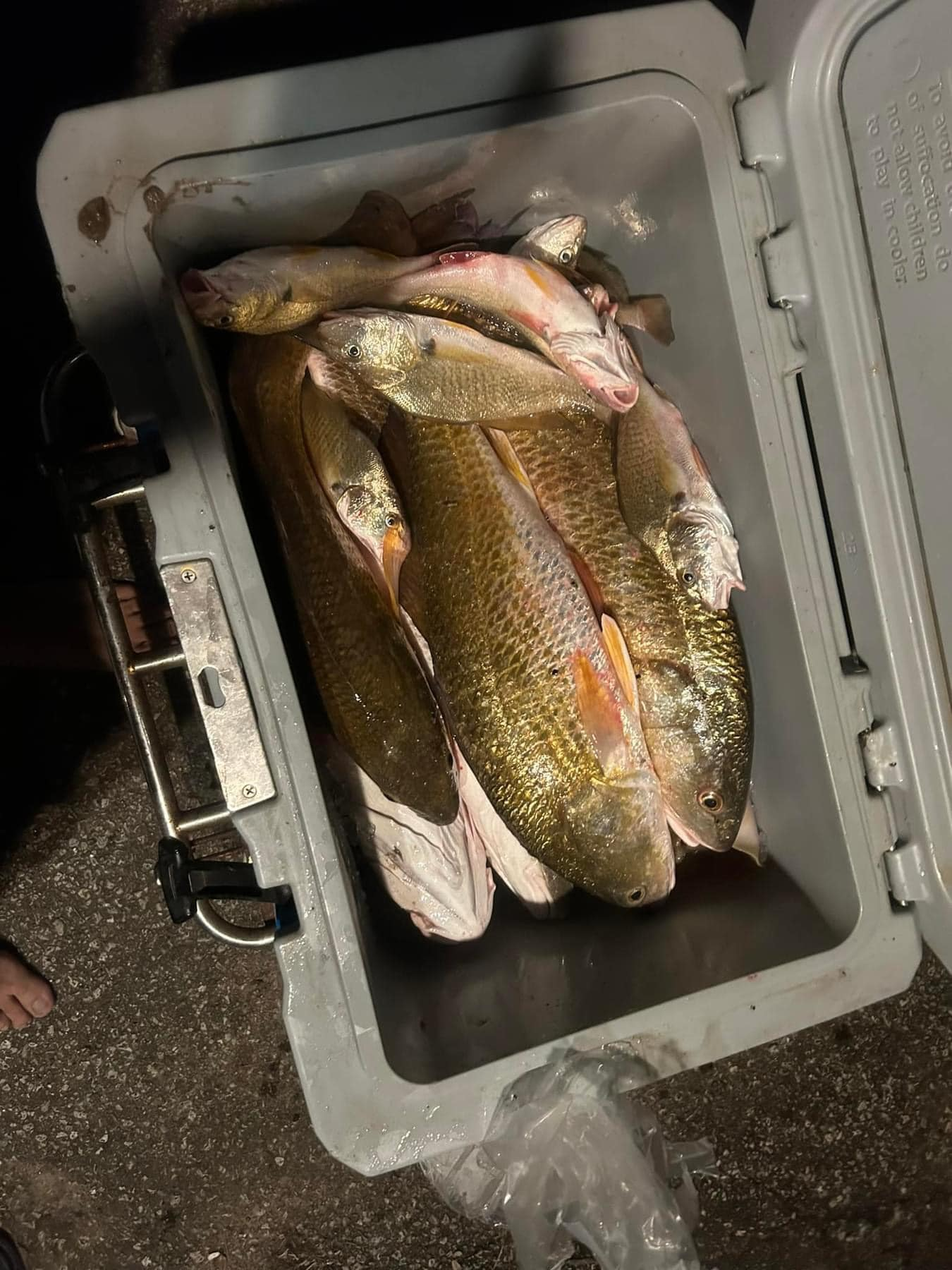
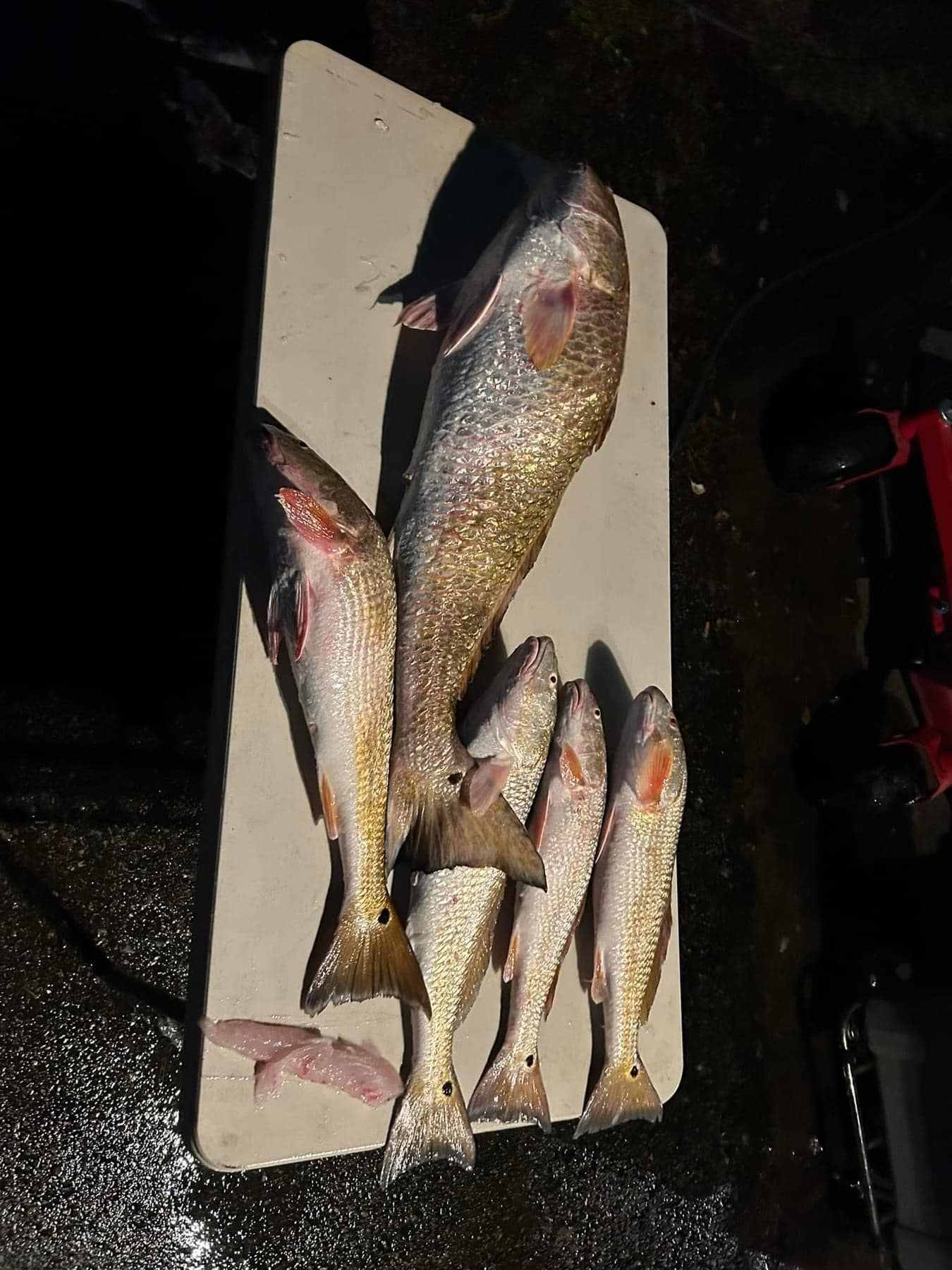
- Color: Redfish carry a copper or reddish-bronze tone across the back and sides. Black drum run dark gray to nearly black.
- The tail spot: Redfish have at least one dark spot near the base of the tail. Black drum do not have it.
- The chin: Black drum have short, whisker-like barbels under the chin. Redfish have a smooth chin.
- Body shape: Black drum have a steeper, humped back. Redfish are longer and more evenly rounded from head to tail.
- Young fish: Smaller black drum often show dark vertical bars on their sides, and the bars fade as the fish grows.
The fastest check is the tail first, then the chin. A spot and a smooth chin mean redfish. Barbels and no spot mean black drum. Size and bag rules differ by species, so check the current Texas regulations and ask your guide before you keep a fish.
Where Both Turn Up in Matagorda
Brawley's Guide Services lists trips built around finding red and black drum in the same stretches of water. One searches bayou, river and shoreline waters for both species. Another covers Matagorda's changing waters, which is a fair description of a bay system where conditions shift from one trip to the next.
That mix is the reason the two fish get paired on trip pages. A guide who knows these waters is reading the day as it comes, and the drum trips are set up around finding either species. You may land one, the other, or both before you head in.
How the Two Are Commonly Fished
Brawley's Guide Services fishes Matagorda Bay inshore, and the methods on offer include light tackle, popping, drifting and bottom fishing. Each one suits a different kind of angler. Popping and light tackle keep you casting and feeling every bump, which suits someone who likes to stay busy with the rod. Drifting and bottom fishing are steadier and give you more room to talk and watch the water.

The method gets picked on the day, not the night before. A trip like Choose Your Approach for Drum and Trout in East Matagorda Bay is named for exactly that idea, and you and the guide decide how to work the water based on conditions. If you have a preference, say so when you book. If you do not, you lose nothing by letting the captain call it.
Why Anglers Often Target Them Together
There are practical reasons to chase both on one trip. The two species share a family and turn up across the same kinds of Matagorda water, so one outing gives you a shot at either. You also handle both fish side by side, and that is the best way to learn the spot, the barbels and the body shape. Reading about a chin barbel is one thing, and holding the fish is another.
A mixed trip also takes pressure off. If one species is slow, the other may be willing, and nobody on the boat has to stake the whole day on a single fish. That matters for groups with different goals. One person may want a redfish for the photo, and another may just want a good bend in the rod.
A single-species day has its own appeal, though. If you have your heart set on one fish, tell the guide when you ask about dates so you both start from the same plan. Having a target does not change the identification checks above, and you will still want to look at the tail and the chin before you decide what is in the net.
Picking the Right Trip for You
Match the trip to what you want out of the day. If you are new to inshore fishing and want to learn two species at once, a red and black drum trip is a sensible starting point. If you want more action with a rod in your hands, ask about popping and light tackle. If you would rather settle in and watch the bay, ask about drifting or bottom fishing.
Brawley's Guide Services is set up for families, and kids are welcome. All children wear life vests on the boat, so bring the little ones and let them see the difference between a copper fish with a tail spot and a dark one with whiskers. Contact Captain William for current dates and the trip that fits your group, and you can head out on Matagorda Bay knowing exactly which drum is on the end of your line.